
The Post-COVID Manufacturing Revolution, Part 2: Your Pace of Change
Tuesday, January 26, 2021
3 min

By Jim Tuttle| Senior Solutions Consultant
Share this report
Featured in this post
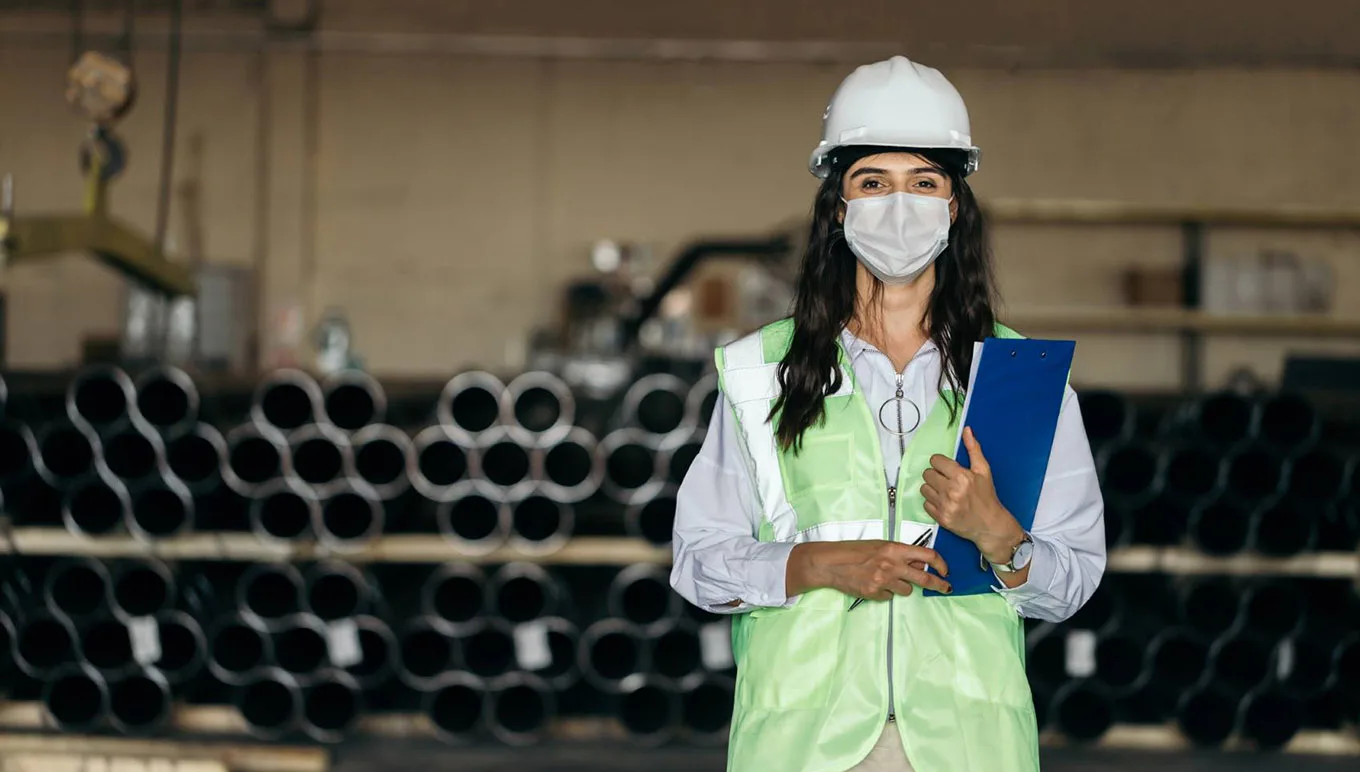
If 2020 taught us anything, it’s to expect the unexpected. But how do you prepare for a world that you can’t predict?
The coronavirus pandemic has underlined the value of agility – building a business capable of moving quickly. It doesn’t matter if you don’t know where the market is heading, provided you can pivot easily.
In part one of our revolution series, we discussed how quickly manufacturing reacted to the initial impact COVID-19. Now it’s time to look further ahead.
Constant change may sound like a fearsome prospect, but it’s actually very empowering.
Manufacturers can capitalize on new ways to collaborate internally and create customer relationships. All you need is the right attitude – and the data to make smart decisions…
A Tale of Toilet Paper and PPE
To understand why agility is so important, we need to talk about the impact COVID-19 had on manufacturing operations.
At one end of the scale, we saw situations where demand massively outstripped supply. The global toilet paper crisis at the beginning of the pandemic is a fitting example. Even manufacturers that could respond to off-the-chart sales had to think on their feet, switching from big bundles for hospitality businesses to 4-packs for the domestic market.
At the other end of the scale, the ‘stay at home’ message brought entire industries to a standstill. This, in turn, ground many production lines to a halt. Quick-thinking manufacturers responded by moving into personal protective equipment (PPE) production, hand sanitizer or medical equipment manufacturing, to support the COVID-19 front line.
Both these examples demonstrate the bottom-line value of rapid response. But changing direction means more than just thinking creatively. You need to be agile in your planning and scheduling, to prioritize new opportunities.
Moving At Speed
As we bounce back from COVID’s initial impact, it’s time for manufacturers to ask yourself some honest questions about the agility of your operations right now:
How accurately can you monitor materials and adapt job schedules, based on what’s actually available?
How quickly can you source components from alternative locations?
How effectively can you optimize people to maximize production, particularly when you’re working below usual capacity?
Can the technology you’re currently using support these critical areas – or is it time to go back to the drawing board?
Increasing pace doesn’t just mean changing systems and processes. To fully move at speed, manufacturing businesses must unlock access to data. This data will generate the business insights you need to see where new opportunities lie. And technology will then enable you to pursue those opportunities.
Data Is the Engine of Flexible Change
As Deloitte explains, “the events of 2020 may be a warning to develop better systems for navigating disruptions like the one we are currently experiencing.” Data is the engine behind that navigation system.
Whatever the market is doing now and whatever it does in the future, data is manufacturing’s most powerful tool. It will show you what’s happening inside and outside of your business, so you can make profit-driven decisions.
In the short-term, data will give manufacturers the tactical insights you need to survive post-COVID. In the long-term, it will enable agile decision making and roadmap building – so you can pivot to stay profitable.
Your challenge for 2021 is to find a partner who can help you extract, interpret and act on data, for responsive planning and scheduling. A technology provider who enables both joined-up thinking and joined-up action, to increase your rate of change.
Aptean’s industrial manufacturing ERP is already giving businesses real-time access to critical data, for smarter business insights.
We can’t predict what’s coming up – but we can help manufacturers to react quickly to whatever lies around the corner. And it’s this ability to act on insight that will equip you to deal with future tremors in the manufacturing landscape.
Get in touch to talk to one of our manufacturing software experts about Aptean’s manufacturing ERP.

Jim Tuttle started his career as an engineer in the manufacturing sector. He also has implemented ERP packages, including Made2Manage, as a consultant for various firms. Jim has been with Aptean for 13 years and assists customers in finding software solutions to meet the needs of their businesses.
By Jim Tuttle| Senior Solutions Consultant
Related Content

Manufacturing ERP: Everything You Need To Know
Get a clear, comprehensive overview of manufacturing ERP—what it is, how it works and the operational and financial benefits it can deliver to your business.
The Complete Guide to OEE Software
Ready to maximize productivity in your manufacturing operation? Then you need OEE software—here’s everything you need to know to get started.
Successfully Navigating the RFP Process to Find Your Industrial Manufacturing ERP
With our free template and handy guidance you can successfully navigate the RFP process to find the right industrial manufacturing ERP for your business.