
From Fragmented Data to Coordinated Action: Industry 5.0 and Food Traceability Execution
Monday, July 27, 2026
7 min

By Aptean Staff Writer
Share This Blog
From Fragmented Data to Coordinated Action: Industry 5.0 and Food Traceability Execution
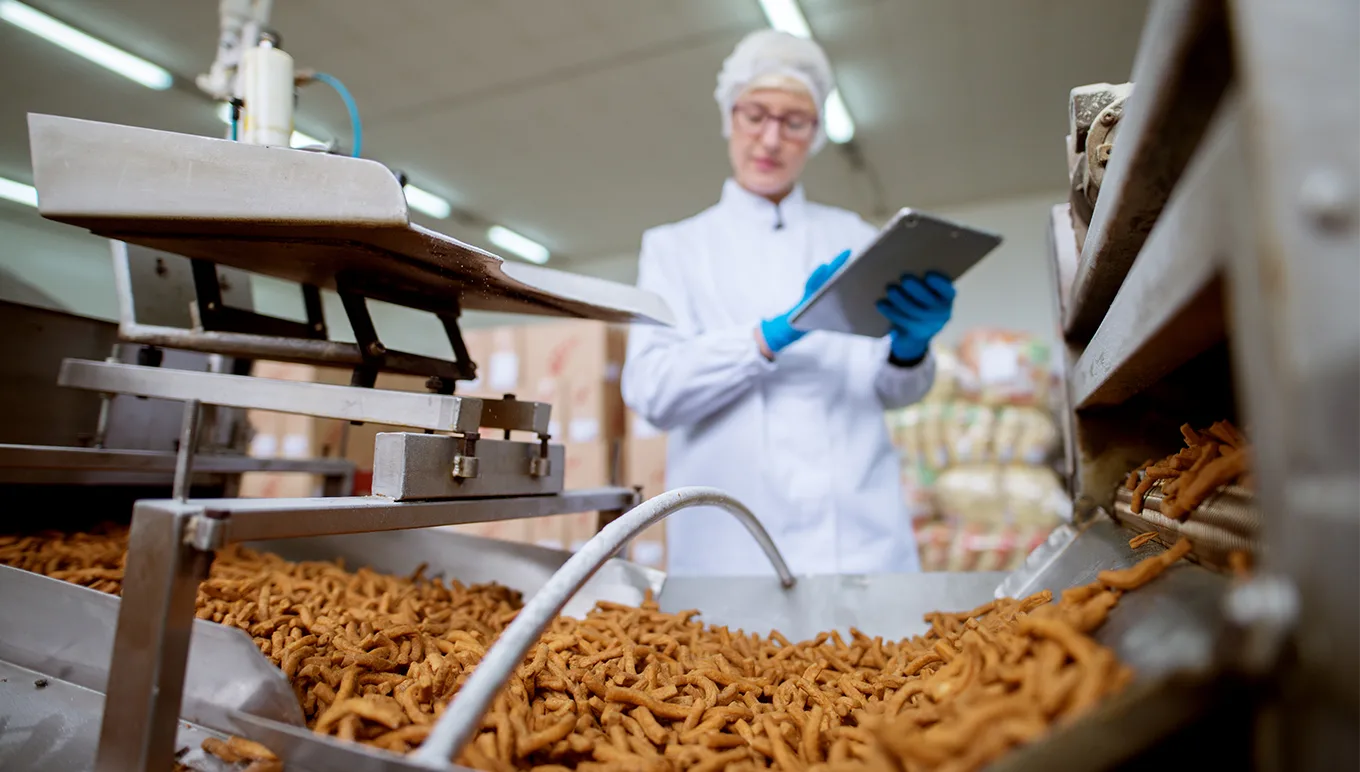
Food recalls test more than compliance. They test how quickly your teams can trace affected lots, verify inspection status, confirm country-of-origin and assess remaining shelf life before impact spreads and create lasting reputational harm for your brand. A 2025 U.S. food recall timeliness and transparency report underscores a recurring weakness across the industry: response slows when critical information is scattered across systems and teams.
Most food and beverage businesses operate using enterprise resource planning (ERP), quality and traceability systems. The challenge emerges during execution. Production, quality, inventory and logistics each hold relevant data, yet operational views rarely connect decisions in real time. As investigations unfold, context is assembled manually, updates lag behind events and containment widens beyond what’s necessary. The result is slower response, broader exposure and reduced confidence during Food and Drug Administration (FDA) inquiries, retailer compliance reviews or Food Safety Modernization Act (FSMA 204) traceability validation requests.
Industry 5.0 represents a modernization shift in how food and beverage companies connect technology to execution. Instead of layering additional point solutions, organizations applying Industry 5.0 principles adopt an intelligent operational platform that links ERP lot data, inspection status, supplier records and distribution activity in a coordinated environment. Information is contextualized and surfaced to the right roles as events unfold, enabling decisions based on synchronized records rather than fragmented updates. The result is tighter lot containment, faster regulatory response and greater control during recalls.
Even with a modern operational platform in place, performance depends on how consistently execution holds under pressure. The breakdowns that follow reflect recurring coordination gaps that limit traceability precision during live events.
5 Traceability Execution Breakdowns in Food and Beverage Operations
Traceability depends on reliable alignment of information, decisions and task ownership as events progress. Small gaps interrupt this flow and create pressure during active production and quality work. Each breakdown below reflects a gap that limits traceability precision and how an intelligent platform supports human decision‑making during safety‑critical tasks.
Breakpoint 1: Fragmented Visibility Across Production, Quality and Inventory
Production updates, quality and safety lab test results, lot genealogy and inventory movement live in separate applications, which forces team members to piece together product history through emails, spreadsheets and manual checks during a deviation or recall alert. This creates long reconstruction periods and wider containment areas. Holds can cover several lots when teams need time to confirm status.
An intelligent platform aligns production, quality and inventory signals in one operational view and surfaces relevant information as conditions change. Team members see lot status, movement details, inspection outcomes, origin data and shelf‑life timing as a single stream. This supports steady decision flow and clear action paths during safety‑critical work.
Breakpoint 2: Manual Coordination During Quality Events
Batch deviations, failed inspection status updates and supplier non‑conformance alerts move through inbox threads, shared files and urgent conversations. Team members track holds in separate documents and exchange updates while related lots may be partially processed before the affected scope is confirmed, creating a gap where physical holds outpace the documentation trail and exposure goes unmanaged.
Quality events gain structure when lot details, inspection updates and task steps are coordinated within a single operational workspace connected to existing systems. Team members follow guided task steps that record actions in context and link each update to the active event. This supports confident judgment during holds, deviations and corrective work by keeping information current and accessible.
Breakpoint 3: Role-Based Information Gaps
Teams across production, quality, warehouse, logistics, IT and leadership access information at different times, which creates uncertainty during inspections, retailer requests and internal reviews. Critical details exist, yet team members search through separate systems or wait for updates during active production and quality work. This slows response and interrupts progress because each person works from a different point in the data chain.
When compliance and operational data are surfaced within a single shared environment, team members don’t have to search across systems for answers. Role‑aligned views support timely judgment during inspections, audits and internal checks by keeping information current and connected to ongoing tasks.
Breakpoint 4: Sustainability and Waste Data Outside Traceability Workflows
Waste, energy and packaging metrics typically sit outside traceability and quality workflows, which means key sustainability data stays disconnected from daily production, compliance activity and audit reporting. When rework and material loss aren’t tied to batch records, root‑cause visibility suffers, batch accountability weakens and your compliance exposure grows. These gaps affect audit readiness during traceability checks and limit timely reporting when regulators or customers request details.
When efficiency metrics, waste details and traceability data are within the same workspace, your teams don’t have to chase information across systems. They see sustainability and safety conditions together, in context, as work is happening. That means faster decisions during deviations, rework assessments and quality checks as well as clearer root-cause visibility when a batch goes on QA hold. This allows you to trace a material loss to a specific lot, understand what drove it and act with accountability rather than assumption.
Breakpoint 5: Slow Cross-Functional Response During Recalls
During product recalls, quality, operations and IT teams work from separate tools and follow their own priorities. Coordination slows because each group is tracking status, risks and required actions in different places. Teams struggle to gather recall data together and agree on production pauses while they review these details. Confidence falls as reviews stall and team members spend time aligning information instead of acting on it.
When these groups share one environment, everyone sees the same issues, the same status and the role-specific steps in front of them. The intelligent platform highlights active issues and contextual prompts automatically, so your quality team can act on their tasks while operations manages the line. This results in timely decisions, consistent traceability records and clear accountability during audits, recalls and escalations.
The Cost of Repeated Coordination Gaps in Daily Operations
Long‑term exposure to these breakpoints adds operational strain because each delay or missed update affects containment, documentation and audit readiness. When your teams are working from partial information—tracking status in separate tools, waiting on updates before making containment calls—investigations expand. Wider scope means more product held, more documentation to reconcile and greater regulatory scrutiny before direct costs even begin.
Industry research puts the average direct cost of a food recall at $10 million. When indirect costs are included, such as brand impact, lost distribution and legal exposure, the total can reach $30 million or more. Coordination gaps don't cause recalls. But they determine how contained, how fast and how costly the response turns out to be.
Enabling Industry 5.0 in Food and Beverage Execution With AppCentral
Running a food and beverage operation means managing more complexity than most industries face. AppCentral brings all teams, across production, logistics, quality, compliance and more, into one environment, connecting the data, workflows and tasks they depend on every day. This is Industry 5.0 in practice: technology that keeps human judgment at the center of every decision, supports sustainable operations and builds the resilience your teams need when conditions change. Each team gets role-based context that stays current as work progresses, without having to switch between systems.
Aptean food and beverage solutions delivered within AppCentral include:
Enterprise resource planning (ERP) – Supports production, procurement and quality activity. Production and planning teams gain aligned material, lot and supplier data for daily scheduling and traceability checks.
Transportation management system (TMS) – Supports distribution operations and route planning. Logistics teams gain visibility into shipment status, routing and carrier performance.
Electronic data interchange (EDI) – Supports order processing and partner communication. Customer service and supply chain teams gain real-time document exchange for orders, receipts and invoices.
Product lifecycle management (PLM) – Supports formulation, labeling and compliance reviews. Research and development and regulatory teams gain access to product specifications, claims and documentation in one place.
Enterprise asset management (EAM) – Supports maintenance and asset coordination. Maintenance teams gain visibility into asset performance, work orders and preventive maintenance schedules.
Overall equipment effectiveness (OEE) – Supports production monitoring and performance visibility. Operations teams gain access to real-time performance metrics such as plan attainment and throughput.
Aptean Intelligence is at the core of AppCentral, adding AI-driven assistance that analyzes real-time data from connected systems and delivers contextual guidance to users during active work. With Aptean GenAI Query, your teams ask operational questions in natural language and get answers grounded in current lot, production and compliance data. During recalls, audits and quality events, your teams stay oriented because the information they need is visible as the work is happening. The result is a food and beverage operation where employees spend less time chasing information and more time acting on it.
See how Aptean AppCentral for Food & Beverage gives your teams the traceability, coordination and confidence to respond faster and contain the impact when it counts most.

By Aptean Staff Writer
Related Content
Food Traceability: How Technology Allows Your Business To Meet the Challenge
Read our complete guide to food traceability—including why it’s so important, which regulations to account for, best practices and the critical role of technology.
The 4 Reasons Traceability in Food Manufacturing Is Essential for Success
Traceability in food and beverage is essential for success—let’s take a look at the key reasons why and how choosing the right technology is critical.

Strengthening Food and Beverage Traceability With Integrated EAM and ERP Systems
Learn how integrated EAM and ERP systems boost food and beverage traceability, improving safety, compliance, and supply chain visibility.