
The Open Office Experience
Tuesday, February 6, 2018
3 min

By Aptean Staff Writer
Share This Blog
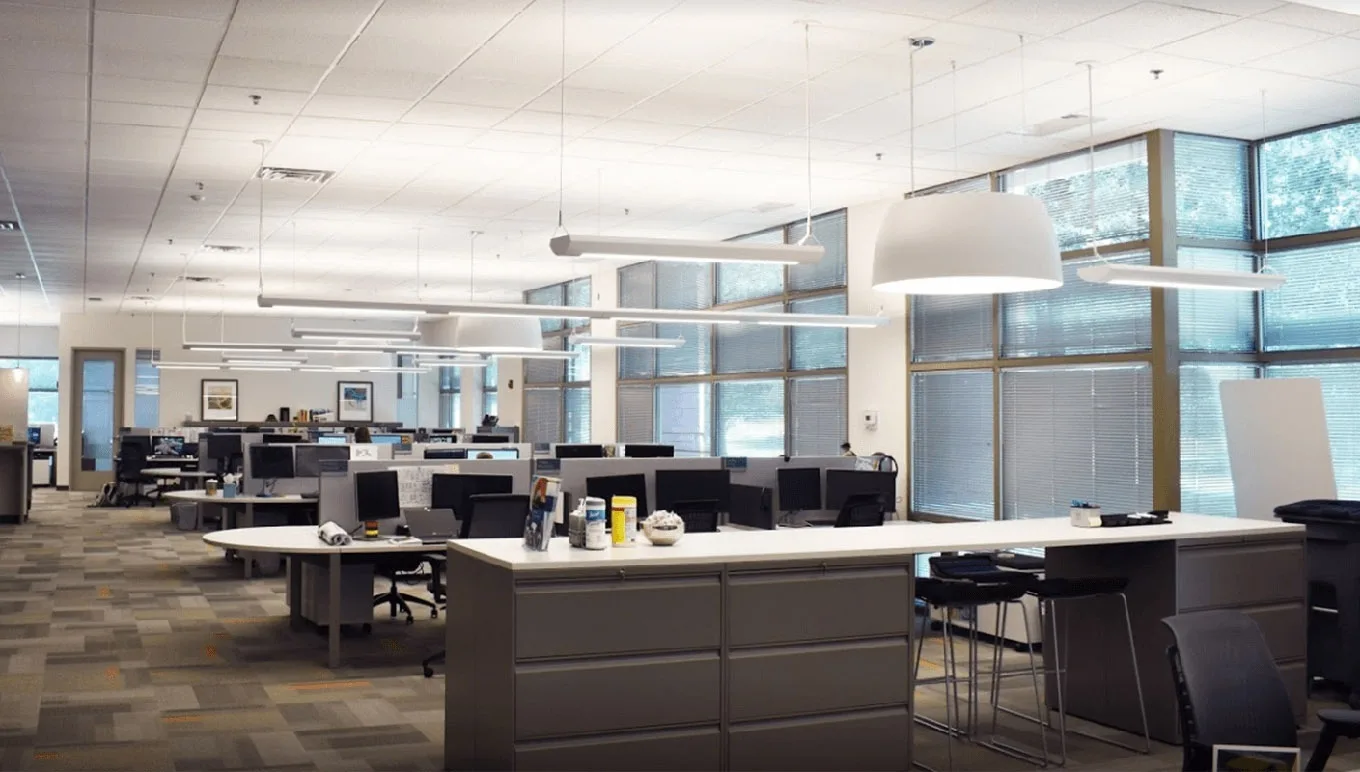
Imagine walking into your new office on your first day at a new job. You look around and instead of rows of walled cubicles and closed conference rooms, you can see everyone’s faces, the open programs on their computers and the paperwork on their desks. Are you excited that you’ll be able to talk easily with your coworkers and ask questions when problems arise? Or are you worried about being scrutinized unfavorably when you don’t appear to be productive?
Originally introduced in Germany in the 1950s, the open office concept gained ground in the United States in the early 2000s, chiefly in the technology sector. Other industries then embraced the trend; according to The Washington Post, about 70% of U.S. offices have an open floor plan. The absence of walls and doors in the workplace visually represents and physically facilitates a more team-oriented environment.
And, in fact, an open office setting offers many advantages. Communication and collaboration are much easier. When you have a question, all you have to do is turn around in your chair, instead of getting up and walking over to the next office or cubicle. Working in an open office can also break down barriers between teams, leading to a greater sense of community and shared purpose. It also creates a feeling of transparency and availability. An open office can give employees more opportunity to ask questions and offer suggestions to managers and directors, who traditionally worked in offices behind closed doors.
The open office also has its drawbacks. It can be difficult to focus on a detailed spreadsheet when the coworker beside you is on the phone trying to close a deal. It may be easier to communicate, but not all of those discussions are about current projects. Research suggests that distractions in an open office can decrease productivity anywhere from 15% to 28%. To combat those distractions, many employees use noise-cancelling headphones, and many offices have a policy where headphones signal “do not disturb.” Privacy also becomes a concern, since anyone behind you can see what you have displayed on your monitor. Privacy filters can be a necessity, especially for those handling sensitive legal, financial or personnel information.
Aptean’s Alpharetta office features a combination of open space, conference rooms, and small meeting and huddle rooms. Individual workstations are organized by department and grouped in open spaces, which makes it easy to have team conversations on the fly. For longer meetings, conference rooms range from small corners suitable for two or three people to boardroom layouts that seat more than a dozen. And huddle and phone rooms offer opportunities for quick meetings and privacy for deeper conversations that shouldn’t be overheard. Aptean also encourages telecommuting when necessary.
But since all work and no play makes for a long day, the office also includes a spacious break room, complete with a pool table, ping pong, foosball, and a giant, wall-mounted Scrabble board. Many employees not only take time to have lunch there, but also use it for impromptu meetings over coffee.
There are pros and cons to every office approach, and different people work better in different environments. The key to adjusting to an open office lies in an old adage: accept the things you cannot change, change the things you can, and recognize the difference. Appreciating the advantages and taking steps to customize the experience to meet your individual needs will help you thrive in an open office environment.

By Aptean Staff Writer
Recent Blogs

ERP Migration Mistakes: 5 Critical Areas to Avoid
Discover 5 migration-specific mistakes that derail ERP projects. Learn how legacy system transitions differ from new implementations and avoid costly post-go-live failures.

Before and After: How AI in Transportation and Logistics Enables Smarter and Smoother Operations
See how AI in transportation and logistics transforms daily operations—from maintenance to routing—with real before-and-after scenarios from Jim Endres.

Comparing Food and Beverage ERP Solutions and Preparing Your Business for Implementation
Learn how to evaluate ERP options based on industry fit, functionality and vendor expertise so you can select a system that supports long-term success.