
Justin Hatcher – Consultant, Professional Services
Interview by Roos Spierings
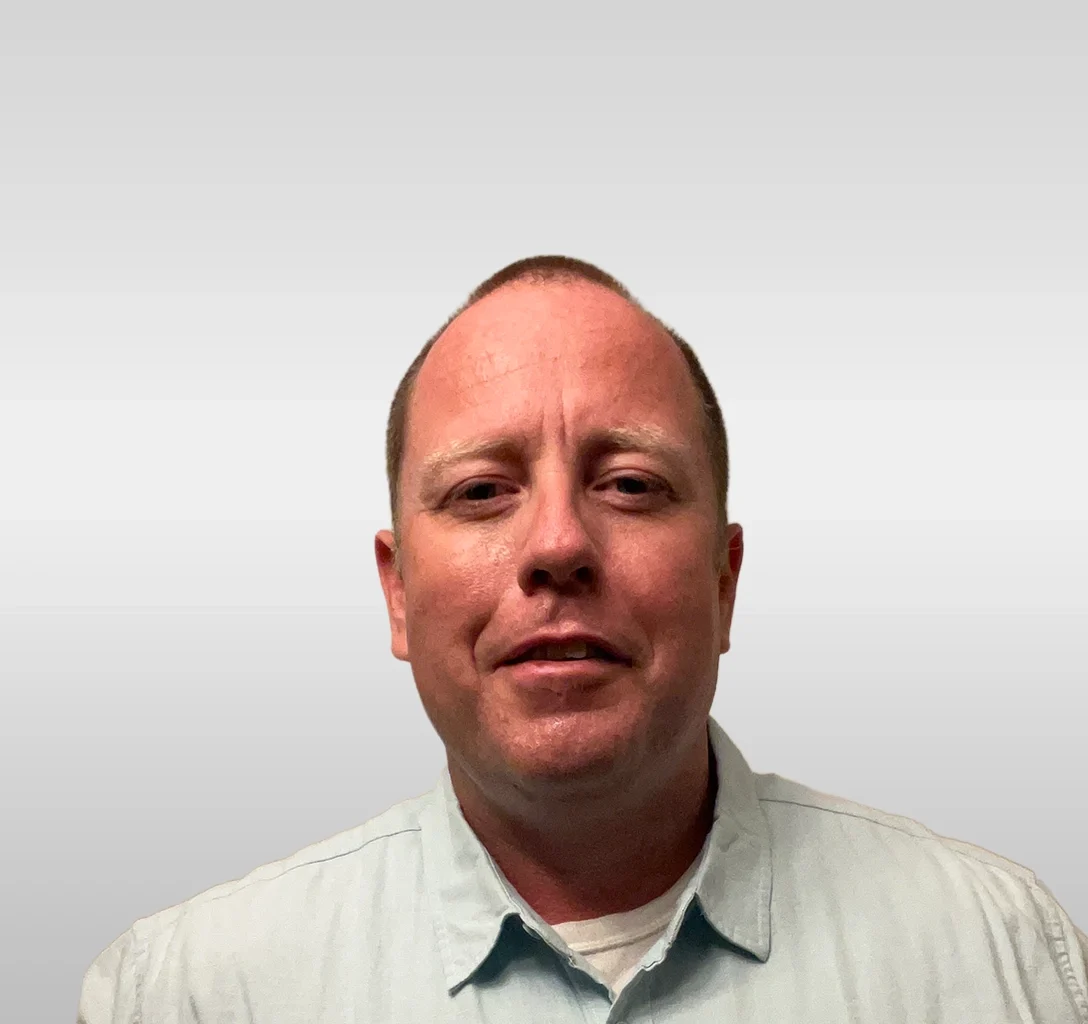
“Build structure, stay curious, and surround yourself with the right people”
Justin Hatcher – Consultant, Professional Services
Coffee or Tea? Coffee—just black. I usually start my day early around 5:30 to 6:00 a.m., so I keep it simple.
What did you want to be when you were younger? I wanted to become a professional dirt bike rider. I started riding around the age of 13 or 14 after getting my first bike, and I was immediately drawn to it.
You still ride today? Yes. Whenever I have the opportunity, usually off-road in the desert. Alongside that passion, I developed an early interest in equipment and mechanics. I was fascinated by how machines work and how they are maintained, which gradually steered me toward the equipment industry. I began my career working hands-on with mining and paving equipment in Arizona, where I built a strong technical foundation. I later pursued my degree to formalize that experience and eventually moved into parts and service management, where I’ve continued to grow and deepen my expertise. While dirt biking was my original ambition, my career has evolved in a way that aligns closely with an industry I’m genuinely passionate about.
How did your transition from dealership management to consulting shape your current specialization within the equipment distribution industry? Before becoming a consultant, I worked as a Parts and Service Manager in a dealership environment, overseeing operations across seven locations. That role was highly hands-on and centered around training teams, onboarding staff, and refining day-to-day processes. It closely mirrors what I do now, but at the dealership level. Today, as a consultant for EquipSoft and the Tracer DMS system, I bring that same operational perspective into a broader context—supporting equipment dealerships with ERP implementation and workflow optimization, particularly within parts and service. It’s a natural extension of my experience, just scaled across multiple organizations and systems.
Within your consulting work, how do the different dealership functions come together in the systems you support? In most dealerships, the system is built around several core modules—primarily parts, service, rentals, and sales, with finance acting as a cross-functional layer that connects everything. My focus is mainly on parts and service, where I help teams manage everything from customer equipment repairs to internal maintenance and inventory control. At the same time, I support advanced workflows and reporting that often span multiple departments. Many of the dealerships I work with are middle to large operations, often with seven or more locations across different states, so aligning these processes within a unified system is critical to maintaining consistency and efficiency across the entire organization.
What does a typical day look like for you as a consultant? My day is fairly structured and planned in advance. I usually start with internal check-ins or support calls to address any issues or blockers and align on priorities. From there, I move into customer-facing work such as training sessions, functional meetings, and project updates. In the afternoon, I focus more on deep work—building workflows, refining reports, and making system adjustments for customers. Over the course of a year, I probably spend a month traveling on site.
How many customers are you working with, and what does a typical project timeline look like? Right now, I’m actively working on about five implementation projects, plus ongoing support for a long-term customer. Timelines vary quite a bit depending on size and complexity. Some go live in four to five months, while others can take over a year, depending on the organization’s readiness and how quickly they adopt the system.
What is the most common challenge you see across customers during implementations? The biggest challenge is consistently getting people to commit time to training. I understand it well because I’ve been in that position myself—teams are expected to learn a new system while still managing their full-time responsibilities. That makes it difficult to fully focus on adoption. The projects that succeed fastest are the ones where customers create real space for training, sometimes even dedicating people entirely to it so they’re not splitting attention with day-to-day work. Without that level of focus, timelines naturally stretch out.
Do you see tools like App Central changing how customers approach training and adoption? Yes, absolutely. It’s a real game changer going forward. By making information more accessible, users can learn and find answers much more independently, without always relying on scheduled sessions or other people. They can jump in, quickly get what they need, and keep progressing. That kind of accessibility really accelerates adoption and builds confidence across teams.
What makes Aptean special to work for? What stands out most is the strong emphasis on work-life balance and the support from my managers and team. While expectations are clear, there’s also real understanding when personal situations come up. Whenever I’ve needed flexibility, whether for family or personal reasons, the response has always been supportive, with my team stepping in without hesitation. That sense of trust and knowing you’re not on your own is what makes the biggest difference.
Are you more detail-oriented or big picture? It depends on the situation, but in my core areas ‘parts and service’ I would definitely say I’m more detail-oriented. In the equipment dealership industry, the details really matter because small errors can have a big operational impact.
Clear or cluttered desk? I prefer a clear desk. I’m very much a notes person, so I’m constantly writing things down throughout the day, but I keep everything organized digitally—mostly in Microsoft Word as a running task list.
What’s the most important thing you’ve learned in this role so far? The biggest lesson has been the value of learning from a truly global environment. I work with colleagues across different countries and perspectives every day, and that’s taught me to be much more intentional about listening and observing how others approach problems. There’s a lot you can pick up from small differences in thinking and communication, and I’ve found that staying open to that has been one of the most valuable parts of the role. I mean, I'm talking to you from the Netherlands this morning. My very first meeting at 6:00 was with a gentleman from India and a woman from Canada. I love it.
Which company value matters most to you, and why? I would say be agile. The reason is that in any industry today, whether it’s ERP, manufacturing, or equipment distribution, things move fast—very much the ‘Amazon effect’ (the expectation of instant service, fast delivery and immediate responses). For me, being agile is really a mindset of adapting and problem-solving. It’s about quickly understanding the issue, identifying the gap, and figuring out how to move forward without getting stuck in process. That ability to adjust quickly is what really drives value for customers.
Any hidden talents? I’m not sure I’d call it a talent, but I do have a bit of a history with breaking bones. Around 64 in total over the years. Most of that comes from motorsports.
Do you have any little routines or listen to music that keep you in the zone at work? For me, it really comes down to my task list—the running document I keep throughout the day. Once something goes on there, I treat it as a commitment that needs to be handled quickly and properly.
And finally... If you could give one piece of advice to the next generation stepping into this role, what would it be? Find a system that works for you and stick to it. In a remote role especially, structure is key. Without it, it’s easy to lose focus or get distracted. Whether it’s a task list or another method, having a clear way to organize your day makes a big difference. Beyond that, learn from people who are already successful in what you want to do. Be intentional about observing, asking questions, and improving. That mindset will take you much further, much faster. And just as importantly, choose your environment carefully. The people you work with and the culture you are part of have a huge impact on your day-to-day experience. We spend so much of our time at work. Even when you're remote, you're still interacting with other people. It makes your life much better when you enjoy the people and the culture that you work with.