
From Scrap to Cash: Why Sustainability Makes Good Business “Cents”—And Dollars, With Jack Payne
Friday, June 20, 2025
6 min

By Aptean Staff Writer
Share this report
From Scrap to Cash: Why Sustainability Makes Good Business “Cents”—And Dollars, With Jack Payne
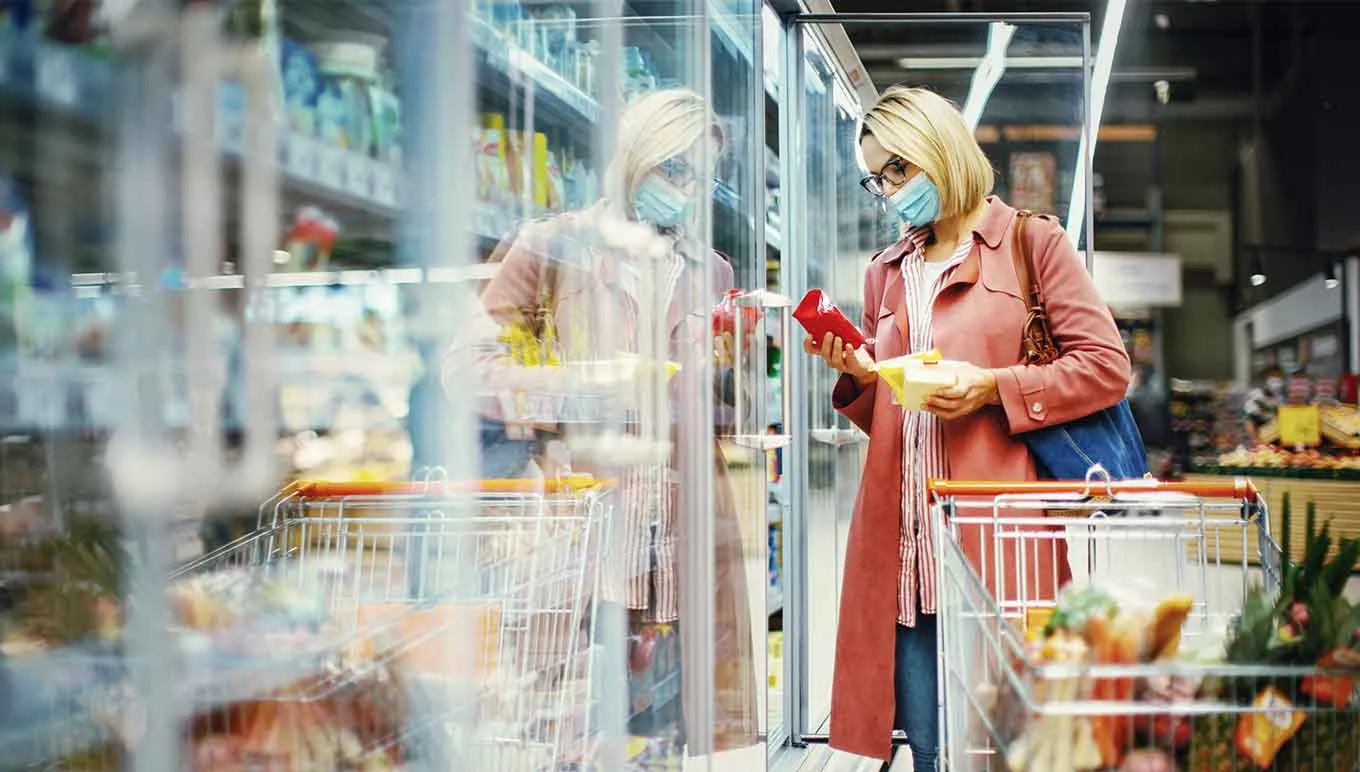
If you’re in the food and beverage industry, your business is losing money—21.5 million metric tons of surplus food went to waste in 2024, costing the industry $382 billion. Most of it never reached consumers—waste that erodes profitability. Without action, waste will keep cutting into your bottom line.
In his book Appetite for Success: Thriving With Technology in the Food and Beverage Industry, industry expert Jack Payne breaks down how everyday issues like food waste and outdated systems can quietly chip away at your profits. He shares practical ways to spot inefficiencies, reduce waste and make smarter use of your resources—helping you improve sustainability and cut costs.
Get a glimpse of the book’s Chapter 7 “Sustainability Makes Good Business “Cents” (and Dollars). This blog breaks down five essential facts about food waste that every business leader should know. With the right approach, reducing waste is possible and at the same time profitable. The small changes today can lead to big payoffs tomorrow.
5 Food Waste Facts You Can’t Ignore
Jack says the five food waste facts you can’t ignore underscore a hard truth—operation inefficiencies drain your resources, hurt the environment and cut into profits. Understanding these realities is the first step—here’s what every food and beverage leader needs to know.
Fact #1 – 40% of Food in the U.S. Is Wasted
More than an environmental concern, food waste is a massive financial leak in your business. Nearly 40% of the U.S. food supply ends up as waste, with losses building up at every stage—from farms and production lines to packaging rooms and retail shelves. Jack puts the scale into perspective, “I was shocked when I learned that both UN research and studies conducted independently by other organizations determined that approximately one-third of edible food is wasted every day.” The implications go far beyond what ends up in the trash.
Jack recounts a striking example in his book: At a contract manufacturing facility, ready-to-heat-and-eat rice in single-serve cups were being filled on a high-speed line—but a calibration issue caused every cup to be overfilled, spilling rice across the equipment. To avoid underweight products and keep shipments on time, the team chose to let the waste continue unchecked. More rice was flung into the corners of the machine than into the cups—driving up waste and cutting into profits.
Request a copy of the book to see how this wasteful scenario could have been prevented—and how smarter technology can catch these issues before they snowball.
Every discarded product represents wasted labor, transportation and storage—costs that cut directly into profitability. Reducing food waste strengthens sustainability, recovers lost value and transforms inefficiencies into a competitive edge.
One solution Jack emphasizes is better tracking—without visibility, waste remains hidden. Investing in real-time monitoring tools allows you to pinpoint loss points, adjust inventory and optimize supply chain decisions. “A reduction in food waste can have a significant impact on increasing sustainability globally and increase the amount of food available to provide nutrition for the world’s population today and in the future,” he explains.
Fact #2 – Wasted Food Means Wasted Resources
Food waste presents a hidden cost that goes beyond the loss of the food itself—it also represents a significant waste of essential resources. Jack emphasizes that your business should be aware of the wasted water, labor, energy and materials tied to food that never reach consumers.
Jack highlights the following key figures concerning wasted resources:
20% of croplands are used to produce food that is eventually wasted.
20% of irrigation water is lost on food that goes to waste.
20% of the seeds fertilizers and labor used to grow crops are wasted.
Jack states, "your inventory system should provide directed picking of both ingredients for production and finished goods for shipping using FEFO (first expiry, first out) picking rules." Implementing FEFO as opposed to FIFO (first in, first out) ensures that older inventory is used first directly reducing the likelihood of expiration and subsequent waste.
Tracking gaps and inefficient processes create unseen waste. Without comprehensive visibility, losses build up until they become too big to ignore. One company found this out the hard way—losing over $1 million a year to an issue hidden in plain sight.
How One Cooked Protein Processor Lost $1M from Overcooking—and Recovered
Fact #3 – Food Waste Is the Leading Contributor to Landfills
Food waste significantly impacts the environment, with Jack stating that "wasted food is also the No. 1 contributor to landfill content by weight." When food rots in landfills, it releases methane, a potent greenhouse gas. In fact, this gas is "25 times more potent than CO₂," compounding the environmental damage. Businesses must address this issue as consumers are increasingly favoring sustainable food choices and brands that prioritize sustainability initiatives. Government agencies are also working to reduce food loss and waste, in 2024 a new Federal Interagency Collaboration was established with a commitment to achieve a goal of 50% reduction of food loss and waste by 2030.
To effectively address this problem, your organization needs to prioritize waste reduction strategies and sustainability tracking. Implementing robust systems to monitor and minimize food waste will not only aid in environmental compliance but also contribute to a more sustainable and efficient operation.
Fact #4 – Packaging Waste Is a Hidden Cost
In his book Appetite for Success, Jack presents a compelling case study that reveals a hidden cost associated with packaging waste. He shares the story of a produce harvester and distributor who made a surprising discovery about their packaging. This company found that the cost of their non-recyclable packaging actually exceeded the cost of the product it contained.
As Jack notes, "with that realization, not only was the company able to transition to recyclable and eco-friendly packaging—they also saved money."
Fact #5 – Cutting Food Waste by 50% Could Alleviate Food Insecurity
Addressing food waste has significant global implications, Jack asserts that reducing it by half could alleviate food insecurity. He explains that "If we can cut food waste by 50% this will provide the food needed to feed the world’s population."
For your business, this global perspective translates to a direct financial advantage. Implementing better planning and tracking systems allows you to transform waste reduction into improved profitability.
To achieve this, your organization should prioritize smart inventory control, automation and process optimization. These strategies represent the most effective solutions for minimizing waste and maximizing efficiency.
Reducing Waste Is the Smartest Business Decision You Can Make
Food waste drains your resources and eats into profits. Every discarded product represents wasted labor, materials and storage costs that add up fast.
Better inventory management and real-time monitoring put you back in control. Smarter processes reduce excess, stabilize your supply chain and recover lost revenue. Businesses that take action see stronger financial performance and long-term stability.
Ready to learn how you can control food waste in your business? Request your copy of Appetite for Success: Thriving With Technology in the Food and Beverage Industry today and get Jack Payne’s expert insights on reducing waste, saving costs and improving sustainability.

By Aptean Staff Writer
Related Content
The Food Industry Trends To Watch In 2026
What food and beverage trends will matter most in 2026? See how consumer demand, AI and operational shifts are changing what it takes to compete.

The Business Benefits of Discrete Manufacturing ERP: Real Results from Aptean Customers
Discover real-world discrete manufacturing ERP case studies showing higher output, faster growth and better visibility with Aptean.

Quick Tour or Custom Demo? How To Evaluate Food and Beverage Software the Right Way
Not all food software demos are equal. See how to use self-led tours and expert-led demos to choose the right system with confidence.