
Manual Processes Are Costing You, and Purpose-Built AI Is the Fix
Only Have a Minute? Here Are the Key Takeaways:
The UK leads Europe in AI adoption, but only a small share of mid-market operators have moved from AI interest to AI in production. The gap between ambition and delivery is where the real cost sits.
Having AI available in your ERP or core business platform isn't the same as having AI working inside your actual workflows. Many businesses have access to AI, but it’s not fully incorporated with operations.
Manual processes carry costs beyond the obvious ones: post-Brexit compliance exposure, institutional knowledge loss from personnel departures, and time that’s spent on routine administration.
In regulated operational environments—complaints handling, case management, statutory response deadlines—manual work isn't just slow. It's a liability.
Purpose-built AI agents deploy in weeks and work with your existing data. No new infrastructure, no new hires, and no integration project required.
Engagement starts with an agreed outcome, not an open-ended build. Aptean scopes the problem, agrees how success will be measured, and builds to it.
Monday, 20 July 2026
7 min

By Aptean Staff Writer
Share this report
Featured in this post
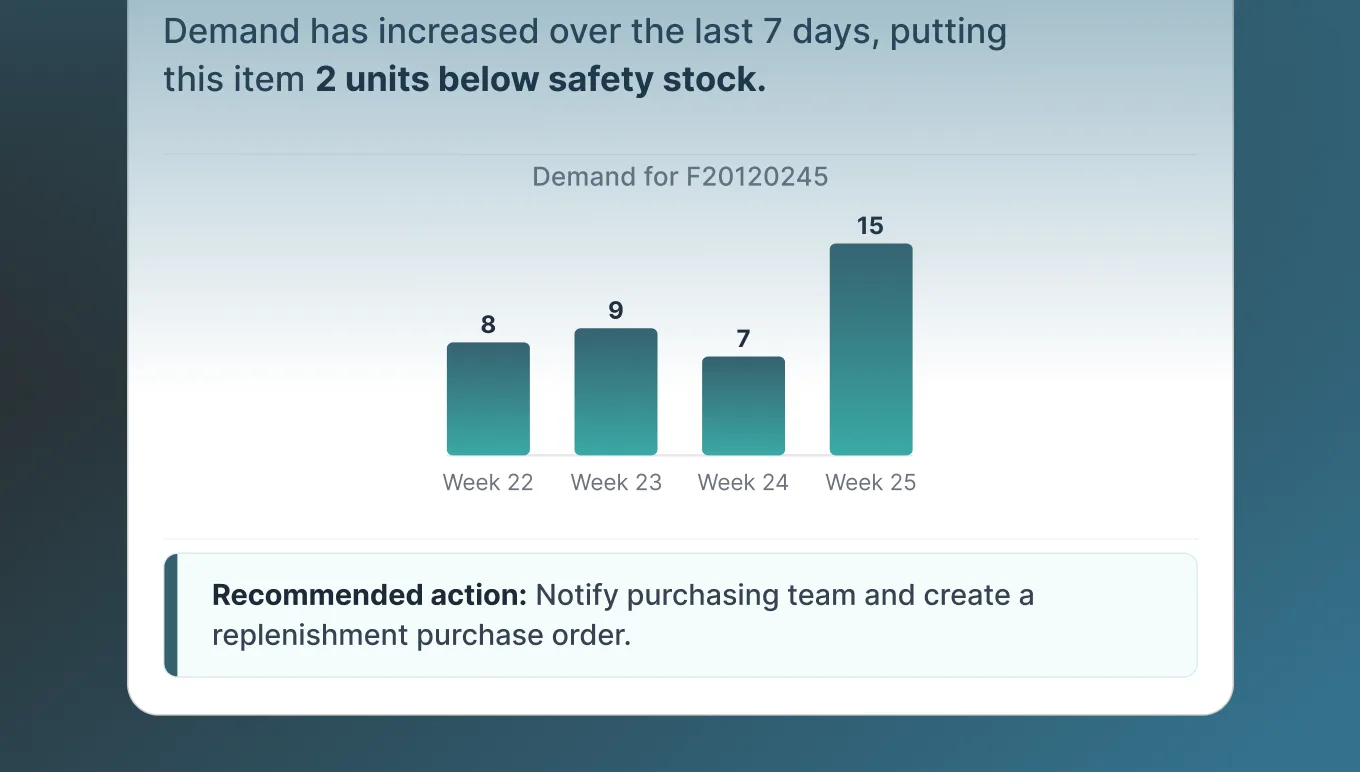
Recent findings indicate that the UK leads Europe in artificial intelligence (AI) adoption. According to Brookings Institution research published earlier this year, 36% of UK workers are now using generative AI in their roles—putting them ahead of their counterparts in every other major European economy.
AI ambitions are running high in manufacturing and distribution organisations with boardroom conversations happening, vendor presentations being delivered, and in some cases, AI features already at their fingertips.
But the data also shows that the share of UK mid-market operators who have made the move from AI interest to AI in production is much closer to the European average (4%) than the gen AI usage headline figure suggests. So there’s a gap—between what AI is supposed to do, and what it’s actually doing for companies today.
Part of the problem is that having AI available in your enterprise resource planning (ERP) or other core business system isn’t the same as having AI working inside your real workflows. The capability may be there but whether it’s integrated into the processes that cost your team time and/or carry compliance risk is a different question.
This post is about what that gap costs. Manual processes carry more financial and regulatory risks than most business leaders realise. But in 2026, they’re a problem you don’t have to live with.
The Work Your Team Is Still Doing by Hand
The most obvious cost of manual processes is time. Data that lives between your systems—in email threads carrying purchase orders, spreadsheets tracking what your ERP doesn’t quite capture, and conversations on the factory floor—requires resource expenditures that never show up on the general ledger. They simply disappear.
There are knock-on effects, too, and while they‘re harder to quantify, they’re just as real. Errors accumulate when your team is working under pressure across multiple systems and formats. Cycle times extend. Decisions get made on data that’s out of date.
And as your business grows, the volume of manual work scales with it—while the team that handles it doesn’t. The extra human-hours required to sustain manual processes at scale is, quietly, one of the most avoidable costs in operations.
The Compliance Cost Most Operators Don’t Budget For
For businesses operating across UK and European markets, the post-Brexit environment has raised the stakes on compliance processes considerably. Customs declarations, ingredient provenance records, border documentation, and supplier certificates require due diligence, and errors carry harder consequences than they did five years ago. These aren’t processes where “close enough is good enough.”
The same is true in operational areas closer to home. If your team handles complaints, customer cases, or claims manually—logging, drafting, routing, and filing—volume compounds the risk. But statutory response deadlines don’t move, and audit trails still need to be complete and consistent.
And keep in mind, the exposure isn’t only financial and reputational—it’s legal. Fail to meet your obligations, and the consequences can include fines, enforcement notices, mandatory audits, and—in the most serious cases — temporary or even permanent suspension of your operating licence.
The Knowledge That Walks Out the Door
Most businesses have at least one person who holds a critical process in their head. They know which supplier to call when the usual route fails, or how to read a demand signal the system doesn’t flag, or what to do about a particular recurring exception. That knowledge isn’t documented—it’s institutional, accumulated over years, and carried by one person.
And when that person leaves (through retirement, new opportunity, or restructuring), the process doesn’t transfer to their replacement automatically. What looked like operational expertise turns into a single point of failure.
Most operations don’t confront this until the day it becomes a crisis, and by then the cost of rebuilding the process is far greater than the cost of addressing it while the knowledge is still in the building.
The Relationship Time That Disappears
There’s a quieter cost that rarely appears on any report. Every hour your team spends on manual administration—formatting data, chasing confirmations, routing information between systems—is an hour they’re not spending with a customer or a supplier. As a result, follow-up calls, proactive updates, and conversations that address an issue before it becomes a problem don’t always happen.
Here, manual processes don’t just slow operations down. They force your most experienced people to focus on the lowest-value portion of their jobs. The more time they spend on tedious, routine tasks, the less time they can spend contributing their expertise to the success of the business.
What Closing the Gap Looks Like
So, how exactly does AI solve all these problems? Through agents taking actions within the guardrails you set.
AI agents work by reading and operating with the data already inside your core business system—the same records, orders, cases, inventory levels, and supplier information your team works with every day. Rather than waiting to be asked, they monitor conditions, identify the actions that need to be taken, and either execute them within the parameters you define or escalate them for review by the human in the loop.
A process that previously required someone to open four different systems, gather information from each, and then compile a response can be completed by an agent in minutes. And it can do it more consistently and accurately than an individual, without manual intervention.
The results map directly to the costs described in this post. Time lost to manual coordination gets reallocated to strategic tasks. Errors that accumulated when your team was working across systems decrease, as agents apply the same rules every time, without variation.
Institutional knowledge that lived in one person’s head gets encoded into a repeatable, auditable workflow, making it easily accessible and executable regardless of who is in the role. And the hours your team was spending on administration become available for the customer conversations, supplier relationships, and decisions that require human judgement.
Our Approach: Aptean Intelligence as a Service
Aptean Intelligence as a Service (AIaaS) is a fully managed, consultative service for businesses that want to act on what this post describes. Aptean’s team works with you to identify the right process, define the outcome, build the agent, conduct quality assurance, and deploy it directly within your operations—typically within 30 to 60 days.
No internal AI expertise required, no lengthy project to manage, and no risk of a solution that goes stale after go-live.
And between our expert’s collective decades of industry experience and the interactions we have with your team, we ensure that all agents are built for the specific workflows and data structures of your vertical—food and beverage, transport and logistics, discrete manufacturing. So, the operational logic is already embedded.
The engagement starts with a scoping conversation. Our team works with yours to define what the agent will do, how success will be measured, and what the baseline looks like before a line of code is written. We’re not starting a lengthy, open-ended technology project. We’re here to solve your problems.
The results are already on record. At Toufayan Bakeries, a traceability process that previously required eight people working over four hours was reduced to one person completing the task in under an hour. That’s all thanks to a purpose-built AI agent running directly on the company’s Aptean ERP data.
For most businesses, the right starting point is a pre-built agent targeting a specific, high-friction process: traceability, compliance, inventory risk, accounts receivable, production efficiency, or case management. For more complex requirements, custom agents are scoped to the specific outcome you need. Either way, the process is the same: define the outcome, agree the measure, then build and deploy.
If you’re ready to identify where manual processes are carrying a cost you don’t have to live with, contact us today. You can also schedule a personalised demo at your convenience, or explore the Aptean AI Academy for live and on-demand sessions with our AI experts.

By Aptean Staff Writer
Related Content
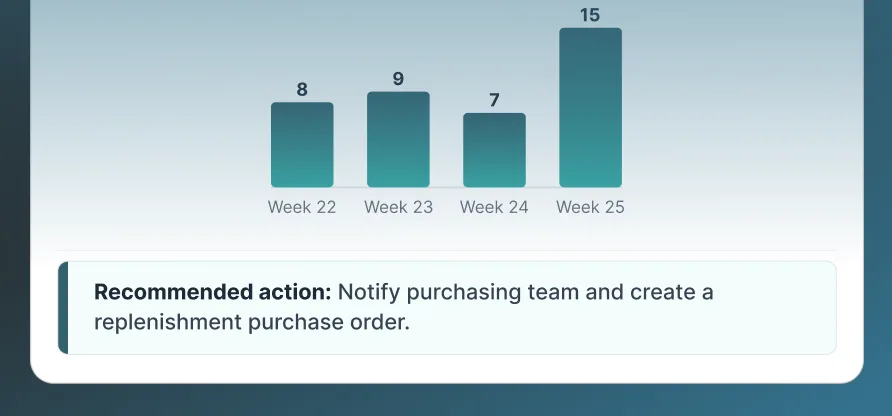
Manual Processes Are Costing You, and Purpose-Built AI Is the Fix
Manual processes drain time and money. See how purpose-built AI eliminates the hidden costs, reduces errors, and frees your team to focus on higher-value work.
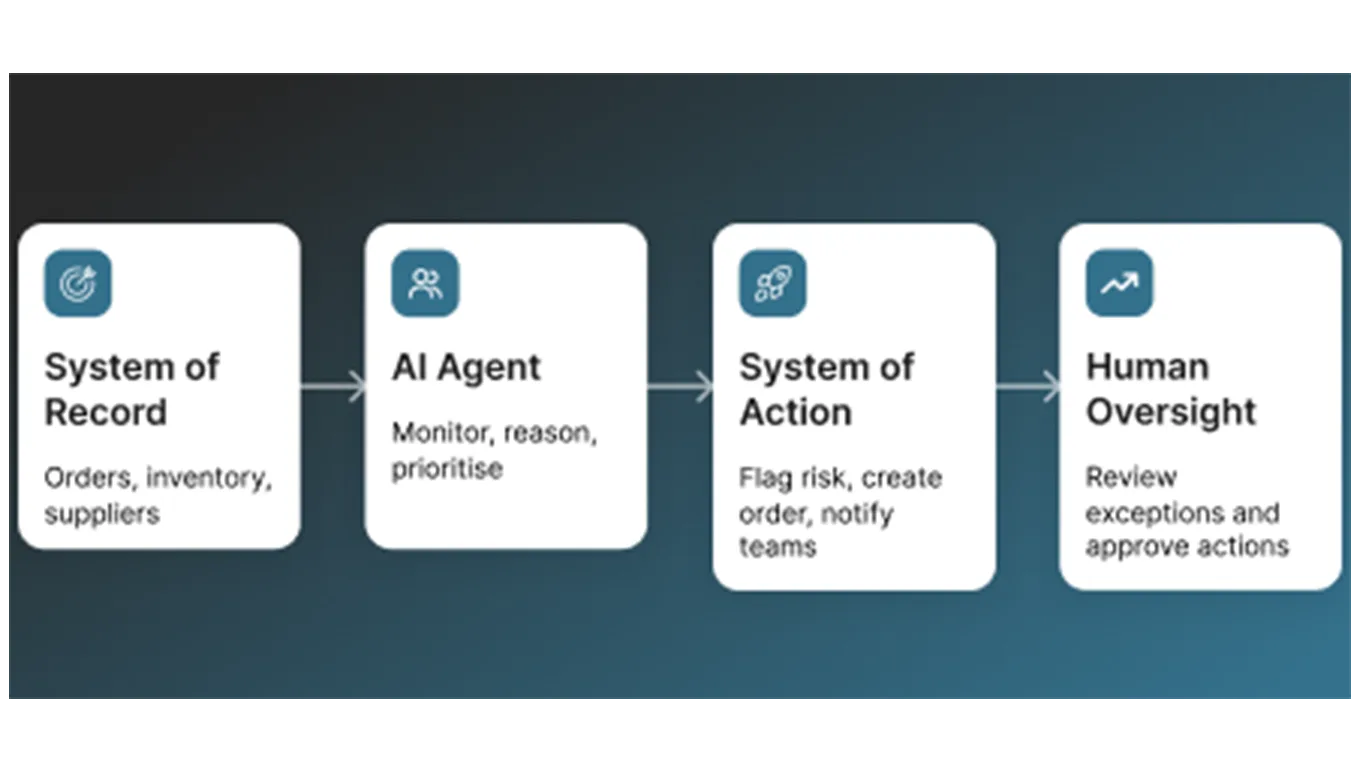
AI 101: What Every Operations Leader Actually Needs to Know
AI explained for operations leaders: the core concepts, real use cases, and the questions to ask before you invest—no jargon or technical background required.
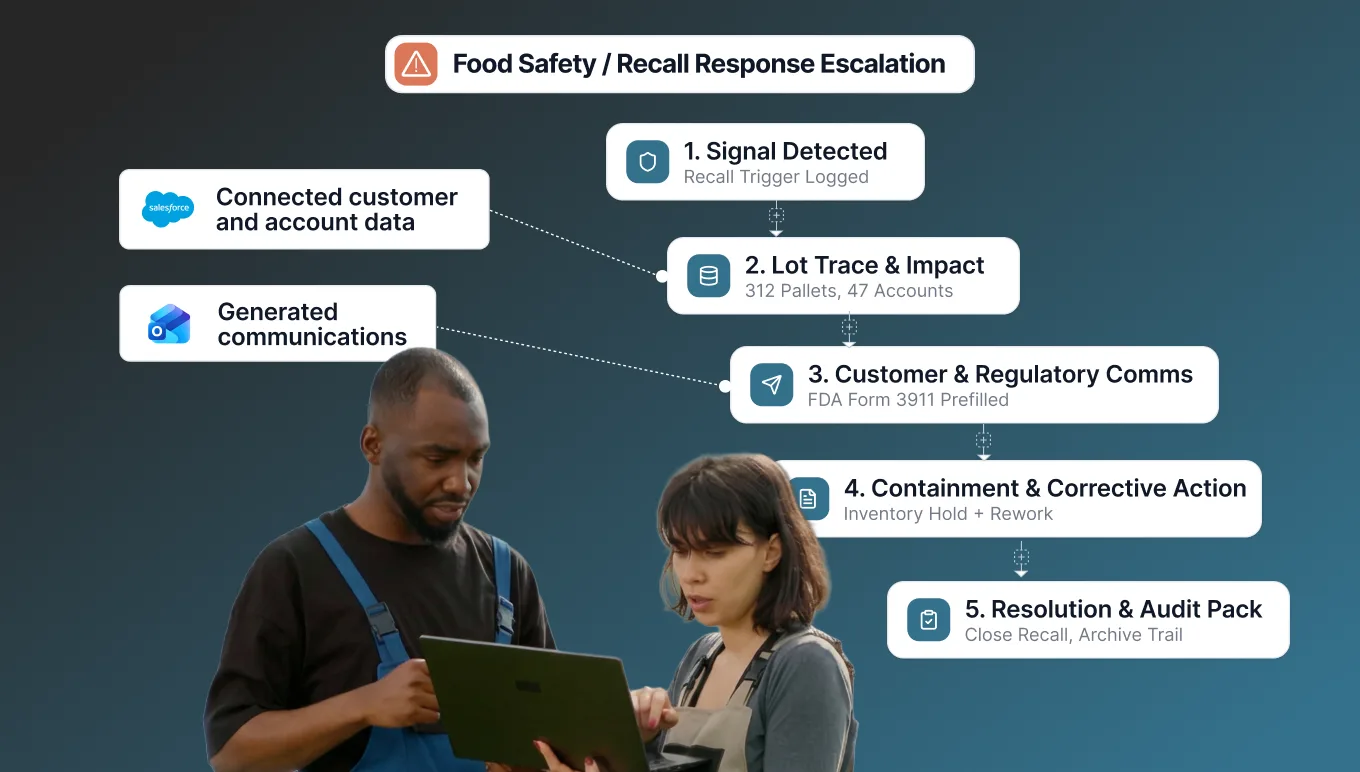
AI Agents at Work: What They're Actually Doing in Your Operations
See how AI agents handle the coordination work behind purchase orders, audits, and disruptions — so your team can focus on judgment. Learn more now.