
Ensuring Batch-to-Batch Consistency: Tackling Ingredient Potency Variation in Supplements and Cosmetics
Friday, December 19, 2025

By Steve Reynolds| Senior Product Manager
Featured in this post

When it comes to supplements and cosmetics, consistency isn’t just a manufacturing goal, it’s a market expectation. Whether a consumer is reaching for a vitamin capsule or a skin-brightening serum, they expect the same results with every use. But for manufacturers working with natural, potency-sensitive ingredients, maintaining batch-to-batch consistency is one of the most complex challenges they face.
Variations in active ingredient strength, raw material quality and lot-to-lot potency can disrupt production plans, compromise product performance and risk regulatory non-compliance. In this blog, we’ll explore how manufacturers like you in the life sciences space (particularly dietary supplements, nutraceuticals, cosmetics and personal care) can manage ingredient potency variation to streamline batch manufacturing processes and protect your brand integrity.
Understanding Potency: Standard vs. Actual Strength
Potency is the concentration of an active component within an ingredient: how much of the ingredient actually delivers a functional effect. Manufacturers typically design formulas based on a standard potency, but each incoming lot of a material has its own unique actual potency due to growing conditions, harvest timing or processing methods. This is known as lot-based potency variance.
To understand the impact of lot-based potency variance on operations, consider this simple example. If a formula assumes 10 kg of an ingredient with 10% potency, but the actual lot tests at 8%, you must adjust ingredient quantities to avoid producing a sub-potent product. In regulated categories like dietary supplements, even slight miscalculations can lead to failed label claims, product recalls or regulatory scrutiny.
The Business and Compliance Risks
Real-world consequences underscore why controlling ingredient variability matters. In 2024, a GAO study on prenatal supplements revealed wild swings in active levels. For example, vitamin E content ranged from 28% to 332% of what was listed on product labels. Such inconsistencies jeopardize consumer safety and destroy brand trust.
In cosmetics and personal care, consistency is equally critical. Whether it’s a serum with vitamin C or a moisturizer containing botanical extracts, any deviation in potency can affect performance, safety and customer satisfaction.
Furthermore, U.S. regulations (like 21 CFR Part 111 for supplements) mandate that every batch must contain at least 100% of the labeled active. Falling below that is not an option. In short, inconsistency introduces risk, from product efficacy and regulatory violations to potential recalls and cost overruns.
Ingredient Potency Variation Is a Batch Production Challenge
When ingredient potency varies, it impacts more than just the amount of that one ingredient; it throws off the entire formula. Adjusting one component has a cascading effect:
You may need more of a low-potency active to hit target strength
Dependent ingredients (e.g., solvents, stabilizers) must adjust proportionally
Filler quantities must shrink or expand to maintain total batch weight or volume
Without automation, this math is prone to human error. Manual recalculations increase risk and slow down production. Even worse, they can undermine formulation integrity, affect capsule fill weights, or cause mixing inconsistencies, especially in batch manufacturing environments where precision is paramount.
How Life Sciences ERP Systems Support Dynamic Batch Adjustments
This is where purpose-built enterprise resource planning (ERP) systems for life sciences and process manufacturing excel. These platforms help ensure batch-to-batch consistency by enabling you to:
Store and track both standard and actual potency at the lot level
Automatically recalculate required quantities of actives and fillers based on lot-specific potency
Adjust dependent ingredients while maintaining bill of materials (BOM) relationships
Log all changes for full traceability and compliance
Variable potencies require two different types of ingredient recalculation, and a life sciences ERP must be able to address them both:
Substitution adjustment: If a substitute ingredient with a different standard potency is used, a batch manufacturing ERP recalculates the new base requirement.
Lot potency refinement: When a specific lot is allocated to a production order, the system adjusts the required quantity based on actual tested potency.
Sometimes, both recalculation steps must be performed for the same production order. For example, if a formula calls for 10 kg of an ingredient at 100% potency, but the substitute is 80% potent, a specialized life sciences ERP increases the required quantity to 12.5 kg. If the selected lot is actually 90% potent, it further refines the amount to 11.11 kg.
Preserving Formula Balance and Fill Weights
When active ingredient quantities shift, filler and dependent ingredients must be recalibrated too. ERP systems maintain defined relationships, such as fixed ratios or balancing rules, to ensure total formulation weight stays constant.
Let’s say a skincare product has a total batch weight of 500 kg, which is based on a BOM calling for 200 kg of active ingredient and 300 kg of filler. If we use a lower-potency active that requires an increase to 250 kg, an ERP automatically reduces the filler quantity to 250 kg. The system maintains the original total while ensuring potency targets are hit and the product’s texture, stability and dosage remain consistent.
Meeting the Challenge of Cosmetic and Nutraceutical Manufacturing
Natural variability is a given in nutraceutical and cosmetic manufacturing processes. The key is building resilience into your batch production process, specifically through systems, like life sciences ERP software, that:
Support active ingredient consistency across batches
Enable substitutions without compromising quality
Maintain formulation ratios and fill weights
Document every change for audit-readiness
The result is greater agility, compliance confidence and operational efficiency.
Final Thoughts: Flexibility Without Compromise
To succeed in today’s supplement and cosmetic markets, your batch manufacturing operation must master the balance between ingredient flexibility and formula precision. With ERP systems designed to manage ingredient potency variation, your teams can respond to sourcing disruptions, adjust recipes in real time and protect both compliance and brand reputation.
Whether you’re managing a production floor or a quality assurance lab, batch-to-batch consistency is the gold standard. With the right tools, it’s absolutely achievable.
And that’s where Aptean can help. Aptean Life Sciences ERP is built specifically for supplement, nutraceutical, cosmetic and personal care manufacturers that need to respond quickly to variability without sacrificing accuracy or compliance.
In addition to functionality for managing ingredient potency, substitutions and dynamic formula recalculations, our solution also offers robust capabilities for lot traceability, batch production, quality control workflows and regulatory documentation, delivering a comprehensive platform for your life sciences operations.
Want to go deeper? Get in touch with our team of experts to schedule a personalized demo or listen to our podcasts for more life science insights.

With more than 20 years of experience in enterprise software, Steve is a seasoned product manager focused on helping regulated industries achieve greater efficiency, compliance, and scalability with Microsoft Dynamics 365 Business Central. At Aptean, he serves as Senior Product Manager on the Life Sciences solutions team, applying his expertise in ERP to address the unique operational and regulatory challenges of nutraceutical, dietary supplement, cosmetic, and personal care manufacturers. His background in food and beverage, a closely related industry, provides a strong foundation for this work.
In addition to his industry specialization, Steve has led initiatives to design and deliver integrations that connect ERP environments with eCommerce platforms, digital payment systems, and other external applications, empowering organizations to streamline operations and gain real-time visibility across channels. He works closely with customers, developers, and partners to ensure technology solutions deliver measurable value and align with real-world business needs. His blend of industry insight and technical expertise makes him a trusted advisor to companies looking to optimize performance and drive growth.
By Steve Reynolds| Senior Product Manager
Related Content

ERP Perspectives: ERP Basics for Life Sciences
For life sciences manufacturers, precision and compliance are non-negotiable. This episode breaks down the unique challenges in supplements and cosmetics, explains core ERP concepts, and shows why generic systems fall short.

How Life Sciences Document Management Drives Compliance and Reduces Risk
Learn why document management is critical in life sciences, the regulations you must follow, and best practices to reduce risk and stay audit ready.

Life Sciences ERP: A Complete Guide for Regulated Manufacturers
Get everything you need to evaluate life sciences ERPs—from key capabilities to what to look for in a vendor—in one practical, expert guide.
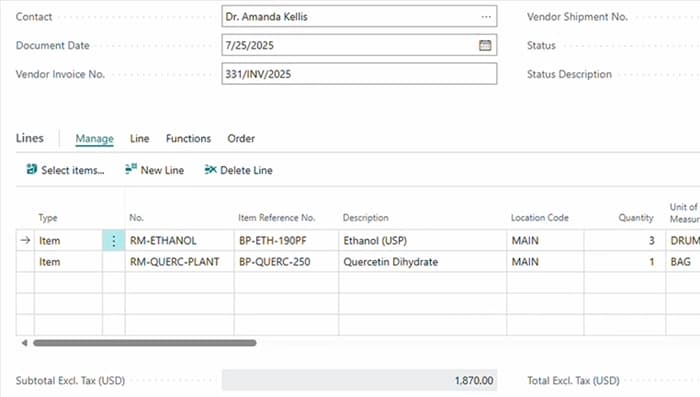
Aptean Life Sciences ERP: Compliance Documents Functionality
See how Aptean's ERP compliance documents functionality supports life sciences companies in this demo.
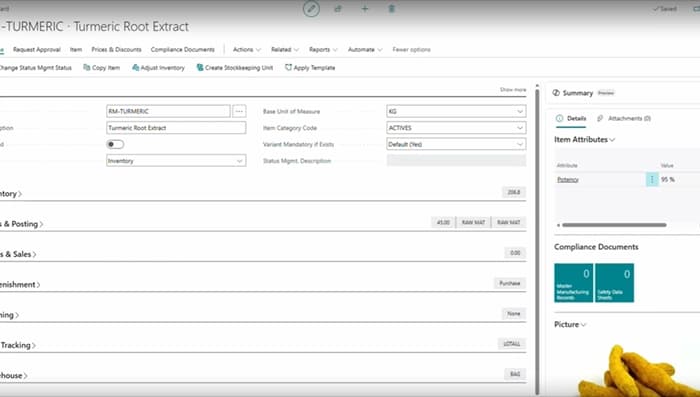
Aptean Life Sciences ERP: Dynamic Production Functionality
See how Aptean's life sciences ERP dynamically scales production ingredients based on variable potencies in this demo.